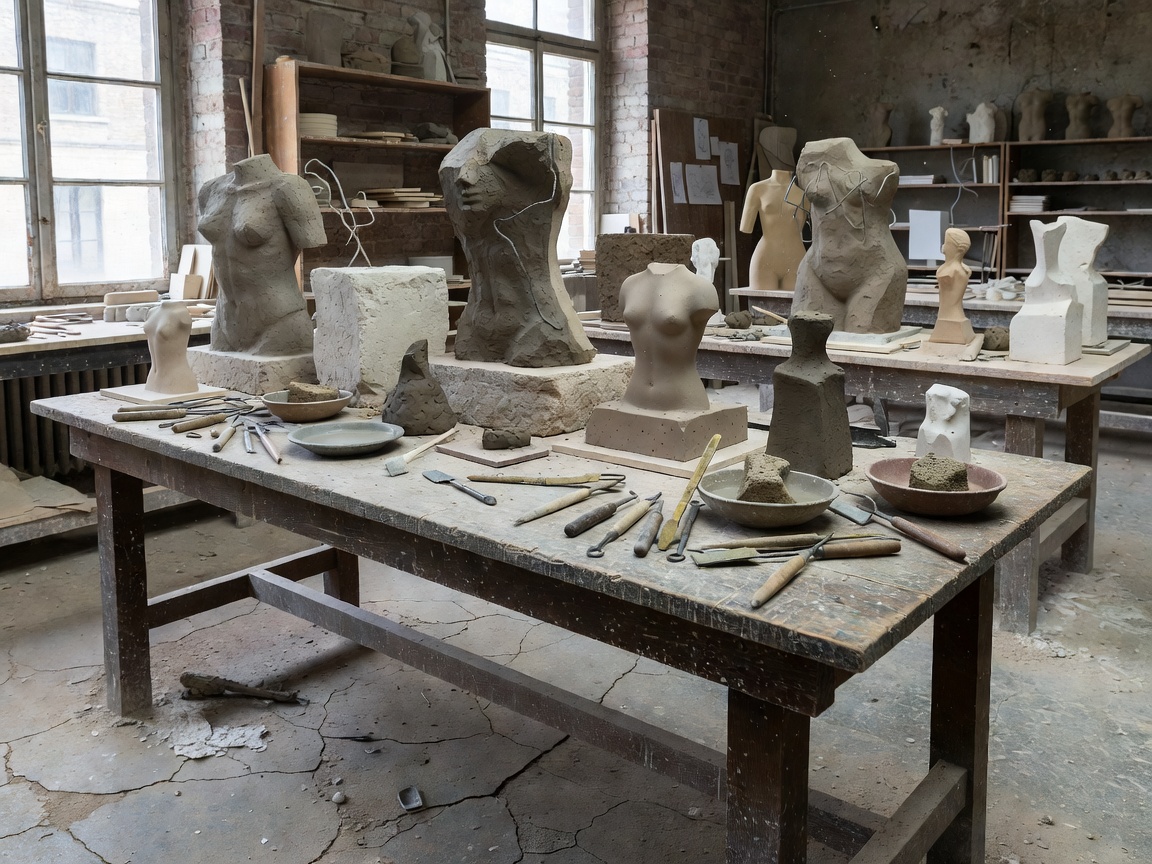
Studio residencies
A studio residency prioritizes workspace. It suits drawing, painting, print, ceramics, sculpture and other practices that need a stable surface or specialist equipment. Ask whether the studio is private, shared, heated, ventilated and accessible outside office hours. Also ask what tools are included and what training is required.
Live/work formats
Live/work programs combine accommodation and a workspace. They reduce daily travel and can support concentrated schedules. Boundaries may be limited. Confirm whether the sleeping area is private, whether guests are allowed, and whether the workspace is suitable for noise, dust, chemicals or large objects.
Research programs
Research formats can be useful for archival, social, ecological or curatorial projects. Their main resource may be access to people, collections, landscapes or conversations rather than equipment. Define the research question in practical terms. State what you need to observe, record, borrow or test.
Production-focused programs
These programs are built around making. They may require an exhibition, screening, performance, publication or public presentation. The outcome can improve focus, but it also introduces deadlines and technical dependencies. Confirm fabrication limits, installation support, storage, shipping and documentation responsibilities.
Community-based programs
Community formats involve local groups, schools, residents or social organizations. The artist is not only a producer. Listening, consent, safeguarding and communication become part of the work. A strong proposal explains the exchange without treating participants as raw material.
Institutional, rural and urban formats
Institutional residencies may provide access to professional networks, archives or public venues. Rural settings can offer quiet, space and slower observation, but transport and supply chains may be limited. Urban programs can provide dense cultural contact and specialist services, while rent, noise and competition for facilities may be higher.
Exchange formats
Exchange programs involve movement between places or reciprocal partnerships. Read the eligibility rules carefully. Some require a partner nomination, a previous relationship or a return activity. Do not assume that travel support, accommodation or a second placement is included.
Good for
Choose a studio format for material concentration. Choose research for inquiry and fieldwork. Choose community work for sustained local exchange. Choose production when a defined public result is useful. Choose rural or urban settings according to access needs, not reputation.
Check before applying
- Match the medium to the facilities.
- Match the proposal scale to the available time.
- Confirm accessibility, transport and supply options.
- Record public obligations and reporting requirements.
- Separate guaranteed resources from optional support.
Related files
Understand program models · Compare financial structures · Assess geography